


Who's Trolling Who?
Dated: 15 Feb, 2026
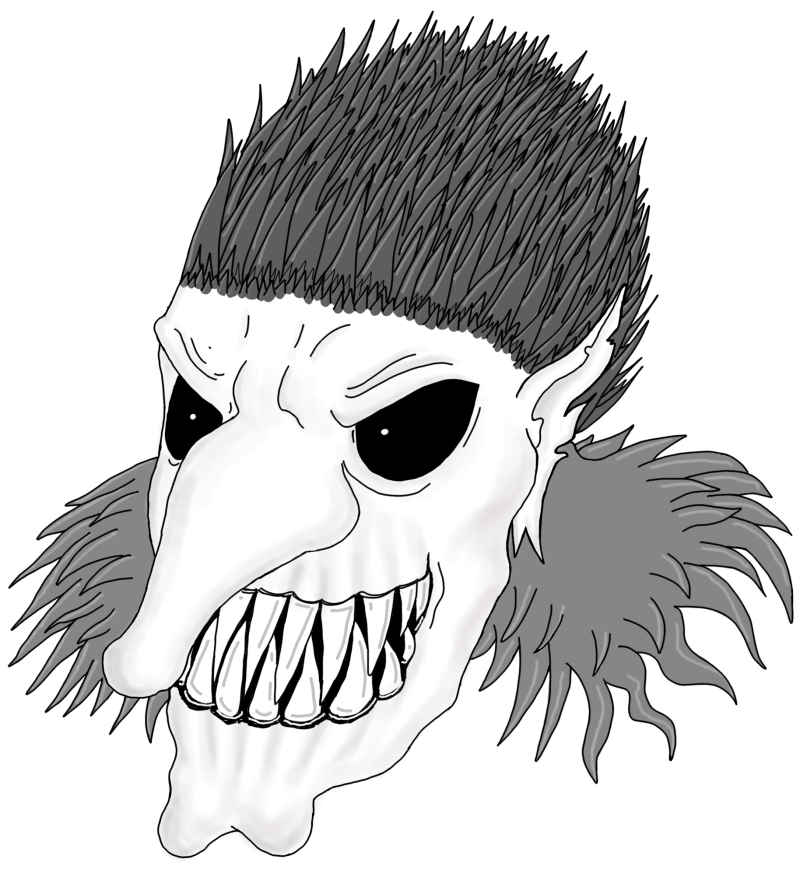
Trolls are one of the most fun and archetypal beasts in D&D or pretty much any FRPG and we are also in the Troll-lovers camp. Very few creatures have been such a foundation of so many adventures based on a very slim description in the Monster Manual from 1st edition. They are everything from a staple of our wandering monster tables to having a Troll as the manager o the most famous inn in Dunromin. We love them.
So, how can we do our usual trick and go into them in far too much detail and turn our ideas of this fantastic beast on their head? Well, here we go. Although, before we start, our highest recommendation goes with the film Trollhunter – watch the original Scandinavian version. You’re welcome.
Biology of the Troll
We use the various types of Trolls from the rules exactly as they are written and have even added our own, curious Wolf Troll to the mix, which can be found in SM19 The Beasts of Barnaynia and SM05 the World Guide to Barnaynia, and are reprinted below because, well, why not?
Trolls are Immortal: The first thing that needs stating about the various species of Trolls is that they do not die of old age. Their Regenerative ability means that the normal aging process common to most species has no impact on their physiology. They will continue to live forever until a fiery or acidic doom comes their way, or they starve to death.
Without a regular feed of serious protein their Regenerative powers start to falter, and they will start to waste away. The search for food is their primary motivation. In fact, it’s the only motivation for Common and Wolf Trolls.
Trolls are sexless: Trolls do not reproduce by sexual intercourse and have no reproductive organs. After considerable, dangerous research by the University of Dunromin it has been established that Trolls reproduce by spontaneous “Clipping”. That is that when a Troll is chopped into two or more pieces on some, apparently random occasions, two of the pieces will grow into two identical Trolls.
It is not known how this happens, what triggers it nor how often it happens. Whatever the trigger for “Clipping” it seems to keep a pretty consistent population of Trolls in the world. It has been theorised that the death of a Troll by burning or exposure to acid causes the release of some kind of spore which perhaps triggers one or more Trolls in the surrounding area to undergo “Clipping” the next time they are significantly injured.
This explains why no Troll young have ever been encountered but does, the researchers at the University of Dunromin inform me, mean that all the Trolls are, essentially, clones of one another. Variation in the population is therefore the result of environmental effects, which are, strangely, passed on to all the “Clippings” produced from that individual. This results in the descendants of Trolls bear the scars and other marks from their ancestor’s life experiences, regardless of their Regenerative powers.
This also suggests that the Trolls are all the progeny from some original, great ancestor troll, although no stories survive of such a thing. Likewise all claims to cross-breed Trolls or Troll half-breeds must be misrepresentations of the facts or mistakes. There are probably some possibilities of mixing Troll strains with other creatures through great magics, but this is pure speculation.
It should be explained that the term “Clippings” comes from the Horticultural term associated with growing “Clippings” of one plant many times, producing genetically identical plants to the first plant. It is probably not entirely an appropriate term, but no one seems to have come up with any better suggestions.
There are some records of mages with questionable motives (those that used to be termed “Evil”) that have also discovered this and have tried breeding Trolls for their own reasons. The relative successes of these processes seem to be poorly recorded as Trolls make universally poor pets and soldiers, usually eating their would-be masters.
Trolls are Omnivorous: Whilst their preference is for animal flesh and/or fish, it has become apparent that Trolls are also quite happy to eat Fungi, fruit and even cereals when it suits them. They have a huge need for Protein but also seem to enjoy Carbohydrates and Fibre too.
Trolls are Tribal, sometimes: Trolls seem perfectly happy to live alone or in groups of almost any size. Wolf Trolls in particular seem to prefer large groups but, with no need for mating or protecting young, it is not really known why. Such groups do seem very fluid, however, so it is perhaps almost a self-preservation path for when food is plentiful or a social thing.
Some Trolls are not stupid: Although very rare, it is apparent that some Trolls can master speech and even formulate strategies and ambitions. This is very rare, it must be emphasised, and the more intelligent Troll species, like Mountain Trolls, tend to ally themselves with wiser entities, such as Giants or powerful Humanoids.
Only some Trolls can communicate verbally: Giant Trolls and two-headed Trolls have been known to speak Common and most common Trolls have been able to communicate in Orcish or Goblin dialects. Many individuals, however, seem unable to master even the most basic communication, despite their genetic similarities. The reasons for this is not apparent but may be that they just can’t be bothered to learn.
Trolls don’t seem to have any Gods: Despite claims in some tomes that the strange entity called Vaprak the Destroyer has some kind of patronage of the Trolls there is nothing to corroborate this claim. As far as can be determined, Troll spiritual awareness is limited to an appreciation of what creatures it can eat and what creatures it should run away from.
The following species of Trolls have been identified on Barnaynia. There may be others but no reliable reports or useful specimens have, as yet, been supplied to the University: Common Troll; Marine Troll (salt and fresh water varieties); Mountain (or Giant) Troll; Giant Two-Headed Troll; Ice Troll and Wolf (or Forest) Troll.
Troll, Wolf (Forest Trolls)
Summary: A breed of Troll that is smaller and faster than normal Trolls and more of a surface-dweller.
Habitat: Forests, Hills and sometimes the upper layers of the Darkworld; Subtropical to Arctic.
Frequency: Very Rare.
No. Encountered: 2d10
Size: M (6-7 feet tall/long)
Move: 150 ft
Armour class: 4 [15]
Hit Dice: 3d8
Attacks: 3
Damage: 1d6+1/1d6+1/1d10
Special Attacks: nil
Special Defences: Regenerate 3hp per round as per normal troll; only half damage from cold-based attacks; camouflage.
Magic Resistance: Normal
Lair Probability: 20%.
Intelligence: low (animal)
Alignment: Neutral (evil)
Level/XP value: IV/ 195 + 3 per hp
Treasure: 1d10×1,000 cp (10%), 1d20×1,000 sp (20%), 1d6×1,000 gp (10%), 1d8×1,000 gp (40%), 1d12 gems (25%), 1d8 jewellery (25%)
Forest Trolls are similar to Ice Trolls, but are smaller and have a bark-like skin for camouflage. As their name suggests, Forest Trolls are found in mountainous, remote evergreen forests. They tend to operate in small raiding packs, howling across the hillsides to one another at night. This, and a propensity to drop to all fours to run faster, has led to many people calling them by their more common ‘Wolf Troll’ moniker.
The ‘den’ where the pack reside is likely to be a thicket of trees and bushes above ground, or shallow caves beneath a wooded area. They have even been known to make ‘nests’ high in the trees. Unlike every other breed of Troll, they are not known to venture deep underground.
They enjoy eating flesh of all kinds but can also subsist on leaves and plants. They seem to have no specific hatred for any particular species or living thing but are known to attack and slaughter other living creatures far beyond any mere food requirements.
They regenerate at 3hp per round as the normal Troll, which means they can re-attach severed limbs or even a head. Regeneration can be prevented by burning the wound with fire or acid. Wolf trolls only suffer half damage from cold based attacks.
Wolf Trolls don’t require magic weapons to hit them like Ice Trolls but do demonstrate strange intelligence, having been known to set snares and traps for their prey. Their wood-like skin and ability to remain motionless allows them to disguise themselves as tree stumps and growths on existing trees. When in such a state they are 80% undetectable beyond 10ft distance.
Many mountain dwelling races tell tales of Wolf Troll packs calling to each other across the mountainsides at night, sounding slightly more tuneful than normal wolves. In the autumn, thought to be their mating season, the males sing to the females, moaning and hooting a haunting but somehow soothing lament to one another. Competing males can often sing at each other for hours, their songs getting more and more complex and enchanting.